
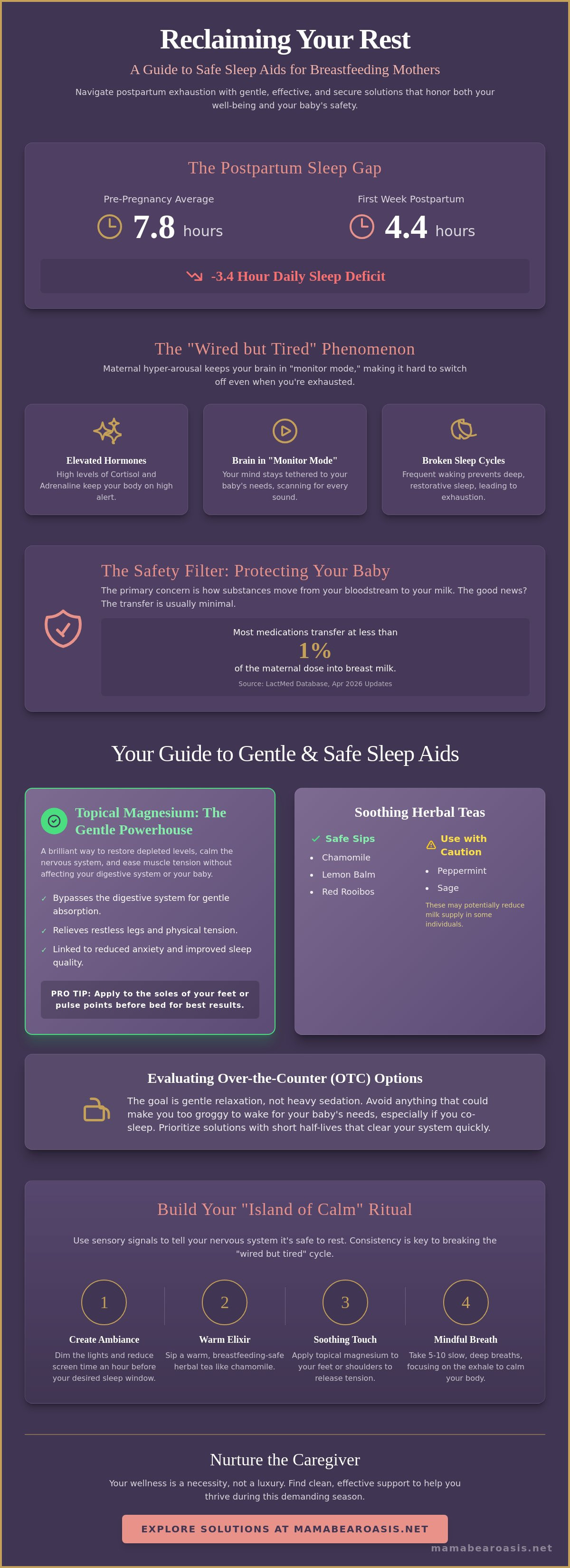
In the first week after giving birth, the average new mother receives just 4.4 hours of daily sleep; this is a sharp decline from the pre-pregnancy average of 7.8 hours. You likely feel the heavy fog of "mom brain" every morning, yet when the house finally falls silent, your mind refuses to switch off. It's a heavy burden to be this exhausted but unable to rest, especially when you're worried that standard remedies might harm your baby. You deserve a solution that honors your role as a protector while giving you the restoration you need.
This guide helps you identify safe sleep aids for breastfeeding that provide peace of mind and faster rest. We've gathered the most recent safety data, including the April 15, 2026, LactMed database updates, to ensure your choices are nurturing and secure. You'll explore gentle alternatives to sedation, from mineral-based rituals to sensory balms. These tools are designed to help you fall asleep faster during small windows of rest and reclaim your island of calm.
Key Takeaways
- Understand the "safety filter" that determines how substances pass into your milk and why timing matters for your peace of mind.
- Discover why topical magnesium is a gentle powerhouse for muscle relaxation and which herbal teas could unintentionally impact your milk supply.
- Evaluate the risks of common over-the-counter options to find truly safe sleep aids for breastfeeding that won't leave you feeling groggy.
- Learn to build a restorative bedtime ritual using sensory signals that tell your body it is finally time to switch off and reclaim your rest.
- Explore the philosophy of nurturing the caregiver, ensuring your own wellness is treated as a fundamental necessity rather than a luxury.
Understanding the Breastfeeding Sleep Struggle: Why Safety Comes First
You are currently navigating one of the most physically demanding seasons of your life. While your heart is full, your energy reserves are likely depleted. Approximately 60% of new mothers experience symptoms of insomnia, and a staggering 67.8% report poor sleep quality during the first six months postpartum. This isn't a failure of will; it's a complex hormonal shift. Choosing safe sleep aids for breastfeeding isn't just a medical decision; it's an act of self-preservation that allows you to show up fully for your little one.
The primary concern for any nursing mother is the "safety filter." We must consider how substances move from your bloodstream into your milk supply. For a comprehensive overview of breastfeeding and its biological contraindications, it's clear that the goal is always to protect the infant while supporting the mother. We advocate for a "nurturing advocate" approach. This means we look for solutions that are gentle enough to keep you responsive for night feedings but effective enough to help you drift off when the opportunity arises.
Over-sedation is a valid fear. If a sleep aid is too heavy, it can impair your ability to wake up when your baby cries. It also creates a risk if you practice any form of proximity sleeping. We prioritize rituals that encourage natural relaxation over chemical knockout. You need to feel restored, not incapacitated.
The Biological Barrier: How Sleep Aids Affect Breast Milk
To understand safety, we look at the Milk-to-Plasma (M/P) ratio. This is a simple way to measure how much of a substance transfers into your milk compared to the concentration in your blood. Most medications transfer at very low levels, often less than 1% of the maternal dose. Timing your rest is also a powerful tool. The latest safety guidance from the LactMed database, updated as recently as April 15, 2026, suggests that strategic dosing is often more effective than the outdated "pump and dump" method. When looking for safe sleep aids for breastfeeding, we focus on options with short half-lives that clear your system quickly.
The "Wired but Tired" Phenomenon
New motherhood keeps your body in a state of high alert. Cortisol and adrenaline levels often remain elevated long after the sun goes down. Your brain stays in "monitor mode," scanning for every tiny whimper or rustle. Maternal hyper-arousal is a biological survival mechanism that keeps your brain tethered to your infant's needs even during periods of physical exhaustion. This state makes it incredibly difficult to "switch off" between nursing sessions. Breaking this cycle requires sensory signals that tell your nervous system it's safe to descend into an island of calm.
A Guide to Safe Sleep Aids: Nutritional, Herbal, and Topical Options
Your body is a sanctuary for your baby, but it also needs to be a place of rest for you. Finding safe sleep aids for breastfeeding doesn't mean you have to choose between your health and your infant's safety. Instead, it's about shifting toward gentle, mineral-based rituals and sensory signals that invite your nervous system to relax. These options provide a bridge to stillness without the heavy fog of traditional sedation.
Topical Magnesium: Why it’s a Game-Changer for Moms
Magnesium is often called the "unsung hero" of maternal wellness. During the postpartum period, many women experience a significant dip in magnesium levels, which is directly linked to increased anxiety and insomnia. Choosing a topical application is a brilliant way to reclaim your rest. Because the mineral is absorbed through the skin, it bypasses your digestive system entirely. This makes it much gentler for both your body and your nursing baby compared to oral supplements that can sometimes cause digestive upset.
For the best results, incorporate magnesium into your evening ritual. Apply it to your pulse points or the soles of your feet just before climbing into bed. This targeted delivery helps soothe restless legs and eases the physical tension that accumulates from carrying your baby all day. It’s a simple, effective step that helps you fall asleep faster during those precious windows of quiet.
Breastfeeding-Friendly Herbs and Botanicals
Sipping a warm cup of tea is a classic way to signal the end of the day. Stick to proven, gentle botanicals like Chamomile, Lemon Balm, and Red Rooibos. These are widely considered safe and won't interfere with your milk supply. Be cautious with peppermint and sage, as some traditional wisdom suggests they may actually reduce milk production. If you are considering more potent options, be aware that as of March 2026, the price of melatonin rose by 0.32% due to supply tightness, making natural herbal rituals even more attractive. Always consult the latest guidance on melatonin use while breastfeeding before starting a high-dose supplement.
Aromatherapy offers another layer of support. Lavender and Cedarwood are powerful sensory tools that help ground your energy. Using a clean-burning soy candle avoids the synthetic fragrances that can trigger sensitivities in both you and your little one. You can easily curate your own island of calm by combining these scents with a tryptophan-rich snack, like pumpkin seeds or a small piece of turkey, to naturally support your body's own melatonin production. These small, intentional choices create a restorative atmosphere that protects your bond while nurturing your need for sleep.
Natural vs. Over-the-Counter: Evaluating Risks and Benefits
Choosing between a natural remedy and an over-the-counter pill often feels like a choice between efficacy and safety. When you're searching for safe sleep aids for breastfeeding, it's vital to remember that your baby's liver and kidneys are still maturing. They don't process medications as quickly as you do. This means a dose that makes you feel slightly drowsy could leave your infant significantly sedated, making it harder for them to wake for necessary feedings.
While the April 15, 2026, updates to the LactMed database provide reassurance for many substances, the risk of "infant drowsiness" remains a primary concern with sedating medications. We believe in a protective approach that favors topical minerals and sensory rituals. These options offer the lowest risk profile because they don't rely on heavy chemical sedation to help you find your island of calm.
Comparing the Common Sleep Aids
To help you navigate these choices, we can look at the three most common options through the lens of maternal and infant wellness. As of the clinical guidelines released in early 2026, the profiles for these aids vary greatly:
- Topical Magnesium: This mineral has zero negative impact on milk supply. It carries no risk of infant sedation and is entirely non-habit forming. It works by soothing your nervous system rather than forcing it into sleep.
- Melatonin: While naturally occurring, supplemental melatonin in high doses can potentially disrupt an infant's developing circadian rhythm. 2026 guidelines suggest keeping doses below 3mg if used at all, though many mothers prefer to avoid it to remain cautious.
- Antihistamines (Diphenhydramine): Commonly known as Benadryl, these are often discouraged. They cross the blood-brain barrier easily and carry a high risk of making your baby unusually sleepy or, in some cases, paradoxically irritable.
The Milk Supply Factor
Protecting your milk supply is a top priority for any nursing mother. Certain sedating medications, particularly antihistamines, work by blocking acetylcholine. This action can inadvertently inhibit prolactin, which is the hormone your body needs to produce milk. If you're already concerned about your supply, these "quick fixes" might create a new set of challenges you didn't bargain for. Research shared in guides on Medications Compatible with Breastfeeding highlights that even drugs considered compatible can have these drying effects.
Topical rituals provide peace of mind without chemical interference. By choosing non-ingested aids like clean-scented soy candles or magnesium roll-ons, you avoid the systemic impact of oral drugs. You get the rest you need without worrying about how a pill might change your baby's behavior or your milk production. These gentle choices allow you to reclaim your stillness while keeping your breastfeeding journey sacred and undisturbed.
Building Your "Island of Calm": Practical Steps for Deeper Rest
Rest is not a luxury; it's a fundamental necessity for every devoted mother. Transitioning from the role of "Mama" to "Self" requires an intentional bridge. This is where your bedtime ritual begins. By creating a structured, low-friction framework, you can signal to your nervous system that the day's domestic weight is finally lifted. You don't need hours of stillness to feel restored. You only need a few precious moments of consistency.
Sensory signaling is your most powerful tool. Start by lighting a handcrafted soy candle. The clean, gentle flicker and soft scent act as a biological anchor. This simple act tells your brain to stop scanning for tasks and start preparing for sleep. Next, apply topical magnesium to your pulse points. This helps ease the physical tension and restless legs that often follow a long day of carrying and nursing. These safe sleep aids for breastfeeding work in harmony with your body, providing relief without the risk of over-sedation.
Finally, choose a quiet activity like mindful breathing or unhurried reading. Avoid screens entirely. The blue light from a phone can suppress your natural melatonin production, which is already under pressure from postpartum hormonal shifts. Your physical environment, or your "oasis," should feel serene. Keep the room cool, dark, and free from clutter. This physical reset creates the breathing room your mind needs to finally switch off.
The 5-Minute Evening Ritual
Fitting self-care into the tiny windows between feedings is a skill. The psychology of scent association is a game-changer here. When you use the same calming fragrance every night, your brain begins to associate that scent with immediate relaxation. This creates a shortcut to sleep onset. Even if you only have five minutes before the next wake-up call, this ritual helps you maximize every second of rest. You can find more inspiration in our guide to Self Care for Busy Moms: 5-Minute Evening Ideas to help you reclaim your time.
Optimizing the Nursing Environment
Your nursing space and your sleeping space should both support stillness. Use dim, warm lighting and consistent white noise. These benefits extend to both you and your baby, helping you both fall back asleep faster after a middle-of-the-night session. Temperature regulation is also vital. In the first week postpartum, your average daily sleep duration drops significantly to just 4.4 hours. Keeping your room at a comfortable 65 to 68 degrees Fahrenheit helps your body stay in a restorative state. If a stressful wake-up leaves you feeling "wired," take three deep, intentional breaths to reset your mind before tucking yourself back into your island of calm.
The Mama Bear Oasis: Reclaiming Your Peace with Clean Wellness
Mama Bear Oasis functions as a digital sanctuary for the mother who gives everything to her family. Our philosophy is rooted in the belief that you cannot pour from an empty cup. We act as a nurturing advocate, insisting that your self-care is a fundamental necessity rather than a fleeting luxury. This commitment is why we've curated safe sleep aids for breastfeeding that prioritize your biological safety and your emotional stillness. We understand the chaos of your day, so we offer a gentle, reassuring hand to help you find your way back to rest.
Our Magnesium & Lavender Sleep Roll-On is designed specifically for this intense life stage. We know that approximately 60% of new mothers experience symptoms of insomnia, yet many feel guilty seeking help. This roll-on offers a way to reclaim your time without compromising your nursing journey. It's a premium, handpicked solution for the "wired but tired" state, helping you transition from the demands of caregiving to a state of restored peace. By choosing a topical ritual, you ensure that your body receives the support it needs through the cleanest possible delivery method.
Every product in our collection, from our aromatherapy balms to our handcrafted candles, reflects a deep respect for the maternal-infant bond. We avoid high-pressure tactics. Instead, we invite you to pick a ritual that feels right for your current needs. Whether you're navigating the first week postpartum or the transition back to work, we provide the tools to help you build your own island of calm.
Why Clean Ingredients are Non-Negotiable
Standard home scents and sleep aids often contain hidden irritants. Synthetic "fragrances" and paraffin wax can release soot and phthalates into your nursery environment. These are burdens your body doesn't need. Our promise is simple: we only use handcrafted soy and therapeutic-grade essential oils. This ensures that your bedtime ritual is as pure as it is effective. You can explore our full philosophy on Why Clean Ingredient Candles Matter for Your Family to see how we protect your sanctuary.
Finding Your Sanctuary
You deserve to wake up feeling restored. It's easy to forget that taking care of yourself is a vital part of taking care of your baby. We want your path to relaxation to be entirely low-friction. This is why we offer a 30-day money-back guarantee on all our products, including the Mama's Bedtime Bundle. If a ritual doesn't help you find the stillness you need, we'll make it right. There is no risk in seeking the rest you've earned.
Your journey to better sleep starts with a single, intentional choice. Reclaim your stillness tonight. Find the support you need to navigate motherhood with a clear mind and a rested heart. Your island of calm is closer than you think.
Find your Island of Calm with our Magnesium Sleep Rituals
Find Your Island of Calm
You've learned that true restoration isn't about chemical sedation; it's about creating a sacred bridge between your daily domestic weight and the stillness of the night. By choosing mineral-based support and sensory signals, you protect both your milk supply and your baby's safety. These safe sleep aids for breastfeeding offer a path to restoration that respects your maternal-infant bond. You don't have to navigate the fog of exhaustion alone. Your well-being is the foundation of your family's happiness.
We've already helped over 10,000 mothers reclaim their peace through rituals that are as clean as they are effective. Every product is handcrafted with non-toxic ingredients, ensuring your sanctuary remains pure. We stand by your rest with a 30-Day Money-Back Guarantee, giving you the freedom to explore our collections risk-free. It's time to prioritize your own wellness as a fundamental necessity. Reclaim your rest with the Magnesium & Lavender Sleep Ritual today. You are a protector, but you also deserve to be protected and nurtured. Sleep well, Mama.
Frequently Asked Questions
Is it safe to take melatonin while breastfeeding?
Melatonin is considered probably safe for short term use, but it's best to proceed with caution. Because melatonin is a hormone, high doses could potentially interfere with your baby's developing internal clock and circadian rhythm. Current clinical observations suggest sticking to low doses, typically under 3mg, to minimize any transfer through breast milk. Always consult your healthcare provider before adding a hormonal supplement to your nightly routine.
Can magnesium roll-ons affect my baby through my skin?
Magnesium roll-ons are incredibly gentle and carry a very low risk of affecting your baby through your skin. Since the mineral is absorbed transdermally, it works locally to soothe your tired muscles and calm your nervous system. It provides a targeted way to use safe sleep aids for breastfeeding without the systemic impact of oral pills. This makes it an ideal choice for mothers who want to remain alert and responsive.
Do sleep aids like Benadryl really dry up breast milk?
Yes, sedating antihistamines like Benadryl can negatively impact your milk production by inhibiting prolactin. These medications work by blocking acetylcholine, which is a neurotransmitter that plays a role in milk stimulation. If you notice a sudden dip in your supply after use, it's best to switch to a non-pharmacological ritual. Many mothers find that topical minerals offer a much safer alternative that doesn't interfere with their breastfeeding journey.
What is the safest natural sleep aid for a nursing mother?
Topical magnesium combined with sensory rituals, such as clean-burning soy candles, is widely regarded as the safest approach for nursing mothers. These methods prioritize physical relaxation over chemical sedation. They allow you to remain fully responsive to your baby's needs while helping your own nervous system find a necessary island of calm. By avoiding ingested substances, you eliminate the risk of transferring complex sedative chemicals to your little one.
Will my baby get sleepy if I use lavender essential oil before nursing?
Your baby won't become sedated or unusually sleepy from the scent of lavender oil alone. When used as aromatherapy, lavender acts as a powerful sensory signal that helps your brain transition into a state of stillness. Just ensure you don't apply essential oils directly to your chest or nipple area where the baby might ingest them. Keeping the scent localized to your pulse points is a safe way to enjoy its benefits.
How long after taking a sleep aid can I safely breastfeed?
Most experts suggest breastfeeding your baby immediately before taking a sleep aid to allow for the longest possible clearance time. This strategy utilizes the biological "half-life" of the substance to ensure the concentration in your milk is at its lowest during the next feeding session. For many substances, this window provides several hours for your body to process and metabolize the aid before your baby nurses again.
Are there any herbs I should strictly avoid while breastfeeding for sleep?
You should strictly avoid herbs like Kava and Valerian root because there is a significant lack of safety data regarding their effects on nursing infants. Additionally, stay away from peppermint and sage in high concentrations. These herbs are traditionally used to dry up milk supply and could unintentionally sabotage your breastfeeding goals. Stick to gentle, proven botanicals like chamomile or lemon balm to ensure your peace of mind remains intact.
Can I use a magnesium supplement and a roll-on at the same time?
You can generally use both a supplement and a roll-on, but you should monitor your total daily magnesium intake carefully. The established upper limit for supplemental magnesium is 350mg per day for adults. Combining a topical roll-on with a low-dose oral supplement can help ease restless legs and physical tension more effectively without exceeding safe levels. This dual approach helps you reclaim your rest while staying within healthy boundaries.